
Tank vs. Tankless Water Heaters: Which Is Right for Your Home?
When it is time to replace or upgrade your water heater, the first big fork in the road is tank versus tankless. Both deliver hot water, but they work in very different ways and suit different homes. Here is a clear breakdown to help you match the right system to your household, budget, and plans.
What Is a Tank Water Heater?
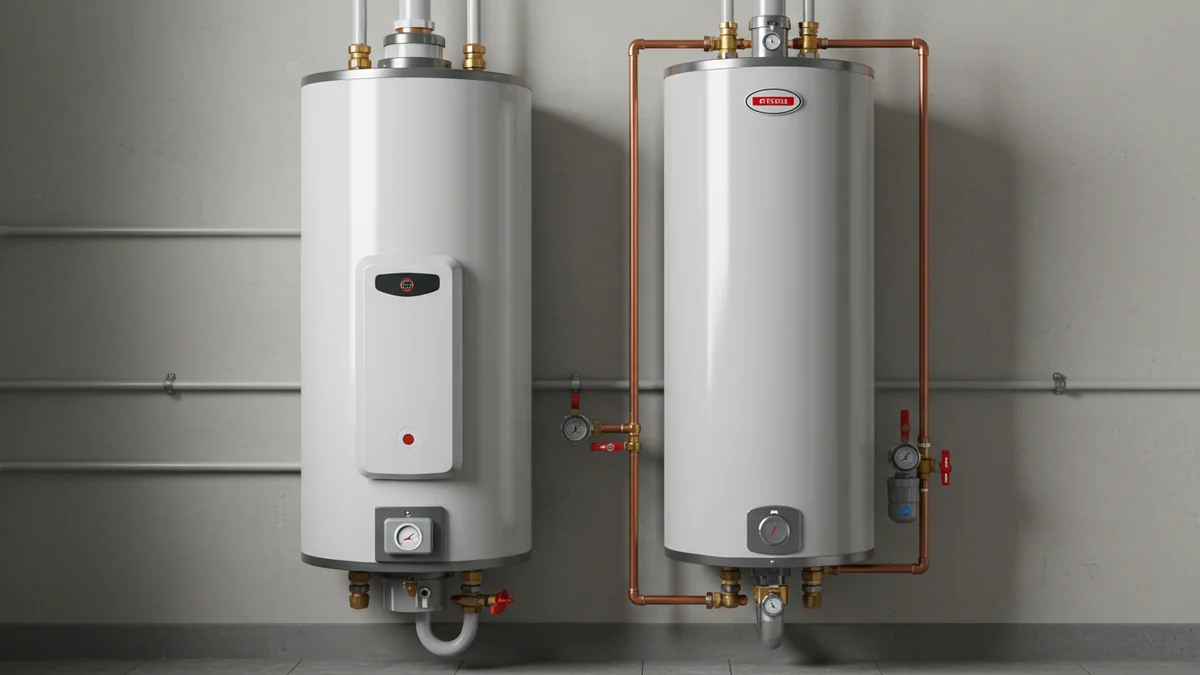
A tank water heater stores a large volume of water — usually 40 to 60 gallons — and keeps it heated and ready around the clock.
Pros
- Lower upfront cost
- Simple, fast installation
- Handles high simultaneous demand well (shower plus dishwasher at once)
Cons
- Limited supply — once the tank runs out, you wait for it to reheat
- Higher energy use, since it heats water even when no one needs it
- Shorter lifespan, typically 8 to 12 years
What Is a Tankless Water Heater?
A tankless (on-demand) heater heats water only as you use it, with no storage tank.
Pros
- Essentially unlimited hot water
- More efficient — no standby heat loss from a stored tank
- Longer lifespan, around 15 to 20 years
- Compact, wall-mounted design that frees up space
Cons
- Higher upfront cost
- May require gas line or electrical upgrades
- Flow rate limits — a unit must be sized correctly to handle multiple fixtures at once
Cost and Lifespan Comparison (GTA)
| Tank | Tankless | |
|---|---|---|
| Installed cost | $1,200 – $2,500 | $2,800 – $4,800+ |
| Lifespan | 8 – 12 years | 15 – 20 years |
| Energy efficiency | Lower | Higher |
| Space needed | More | Less (wall-mounted) |
For a deeper look at tankless pricing, see our tankless installation cost guide.
Which Should You Choose?
Choose a tank if you:
- Are working with a tighter budget
- Have a smaller household
- Want a fast, affordable like-for-like replacement
Choose tankless if you:
- Want lower energy use over the long run
- Never want to run out of hot water
- Plan to stay in the home and want durable equipment
Don’t Forget a Third Option: Heat Pump Water Heaters
There is now a strong third choice — the heat pump (hybrid electric) water heater. Instead of generating heat directly, it moves heat from the surrounding air into the water, the same efficient principle behind a space-heating heat pump. With about 84% of Ontario’s 2024 grid electricity produced without emissions, an electric heat pump water heater can be both efficient and low-carbon. Our heat pump vs. tankless water heater comparison covers the trade-offs.
Look for Current Rebates
In Ontario, energy-efficient water heaters — especially heat pump water heaters — may qualify for incentives through the Home Renovation Savings Program, delivered by Enbridge Gas and Save on Energy. (Note: the older federal Canada Greener Homes Grant has closed to new applications, so the provincial program is now the live pathway.) We cover the details in our Ontario rebate guide.
The takeaway: tanks win on upfront cost and simplicity; tankless wins on efficiency, lifespan, and endless hot water — and a heat pump water heater is worth a look if low running costs matter most.
Still unsure? Book a free in-home consultation anywhere in the GTA, or explore our water heater installation service. We will help you choose the best system and install it safely and to code.
Get expert HVAC advice for your home
Honest quote within the hour. ESA & TSSA certified. 12-year parts & labour warranty.
Related articles
 Water Heaters
 Tankless vs. Heat Pump Water Heaters: The 2026 Ontario Picture
Replacing your water heater in Ontario? Compare tankless and heat pump (hybrid) water heaters on efficiency, lifespan and operating cost — plus which rebates actually apply in 2026.
Water Heaters How Much Does a Tankless Water Heater Installation Cost?
GTA tankless water heater installation costs, the factors that change the price, operating-cost savings, and the current Ontario rebates available in 2026.
Water Heaters How Much Does a Water Heater Installation Cost in the GTA?
GTA water heater installation costs by type — tank, tankless, and heat pump — plus the factors that change the price and the current Ontario rebates available.