
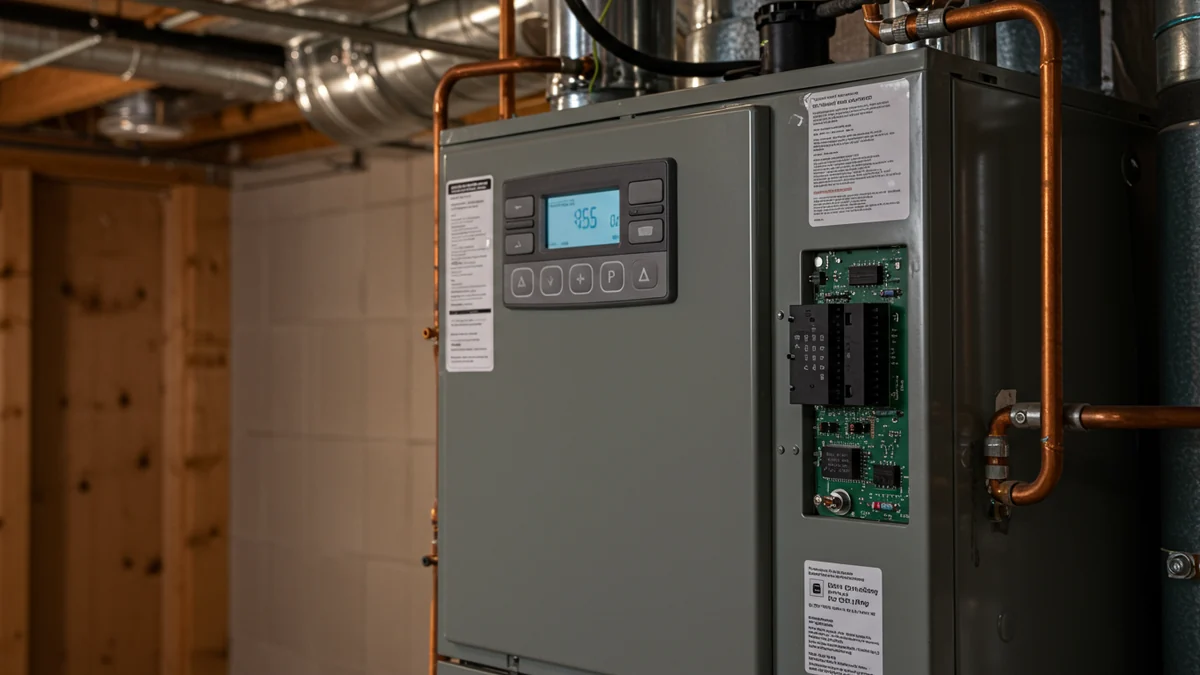
Why an Oversized Furnace or AC Costs You Comfort: Manual J Explained
When homeowners replace a furnace or air conditioner, the instinct is understandable: “Just give me something powerful so my house is never cold or hot.” It feels safe. But in HVAC, bigger is one of the most common and most expensive mistakes you can make.
Here’s the question worth answering before you buy: how do you actually know what size system your home needs? The professional answer is a Manual J load calculation — and it’s why we never just match your old unit’s tonnage.
The myth of “bigger is better”
An oversized system seems like it should be better — more capacity, faster comfort. In practice, an oversized furnace or AC creates a list of problems: uneven temperatures, humidity issues, more noise, higher bills and a system that wears out years early. Let’s unpack why.
Oversized cooling leaves your home cool but muggy
This is the big one. An oversized AC short-cycles — it blasts the air cold very quickly and then shuts off before it has run long enough to do the other half of its job: removing humidity.
Here’s the mechanism. Long AC run times remove more moisture while the system works toward the thermostat setpoint. A right-sized AC runs longer, gentler cycles, pulling humidity out of the air the whole time. An oversized AC satisfies the thermostat fast and switches off — so it reaches the temperature but fails to dehumidify. The result is a home that’s technically “cool” but feels clammy, sticky and uncomfortable. You crank the thermostat lower chasing comfort, and it never quite arrives.
Short-cycling wears equipment out early
Every time a compressor starts up, it draws a surge of power and experiences mechanical stress. An oversized system that constantly starts and stops — short-cycling — racks up far more of those high-stress starts than a right-sized unit running steady cycles. That wears out the compressor prematurely, turning a 15-year system into a 10-year one.
It costs more — twice
You pay more upfront for capacity you don’t need, and then you pay again in energy and repairs over the system’s shortened life. Oversizing is expensive at both ends.
What a Manual J load calculation actually is
So how do the professionals get it right? With a Manual J load calculation — the residential load-calculation standard published by the Air Conditioning Contractors of America (ANSI/ACCA Manual J). It’s the recognized industry method for figuring out exactly how much heating and cooling a specific home needs.
A real Manual J doesn’t guess from square footage alone. It quantifies your home’s heat gain and heat loss using:
- Square footage and the layout of conditioned space
- Insulation R-values in walls, ceilings and floors
- Window U-factors — how much heat your windows let through
- Air infiltration — how leaky or tight the house is
- Local design temperatures — the actual heating and cooling extremes for your area
The output is a real load number — not “your house is about 2,000 square feet, so let’s call it 3 tons.” That square-footage rule of thumb is exactly how homes end up with oversized equipment.
Why we don’t just match your old unit
A lot of replacements are sized by reading the old unit’s nameplate and ordering the same tonnage. The problem: your old unit may have been oversized too, or your home may have changed — new windows, added insulation, a finished basement or an addition all shift the load. Matching the old size just copies forward whatever mistake was made the first time.
Doing a proper sizing assessment is the difference between a system that quietly keeps your home comfortable and one that fights you every season. It also matters for rebates, because heat pump incentives are tiered by capacity — see our 2026 Ontario heat pump rebate guide for how tonnage affects what you get back.
What right-sizing feels like in your home
When a system is correctly sized, you notice what’s absent: no clammy summer air, no rooms that never warm up, no constant on-off cycling, no surprise on the energy bill. The system runs longer, gentler cycles, holds an even temperature, and lasts its full expected lifespan. That’s not luck — it’s the payoff of the load calculation.
The bottom line
The right HVAC system isn’t the biggest one — it’s the one matched to your home. A Manual J load calculation is how that match gets made, and it’s why we treat sizing as the first step of every install, not an afterthought.
Get a real sizing assessment
We perform a proper load calculation on every furnace and air conditioner install — never a tonnage guess. If you want a system sized to your actual home, book a free quote and we’ll do it right, usually within the hour. You can also check our current furnace and AC sale for pricing.
Get expert HVAC advice for your home
Honest quote within the hour. ESA & TSSA certified. 12-year parts & labour warranty.
Related articles
 Buyer Guides
 SEER2, HSPF2 and AFUE Explained: The HVAC Ratings That Actually Matter
Confused by SEER2, HSPF2 and AFUE on your HVAC quote? Here is what each rating means, why a 16 SEER unit now reads 15.2 SEER2, and how to compare equipment honestly in 2026.
 Buyer Guides
 ESA and TSSA: The Two Ontario Authorities Behind a Legal HVAC Install
A cheap unlicensed HVAC install can void your insurance and break Ontario law. Here is what the ESA and TSSA actually require, and why a licensed, insured contractor protects you.
Buyer Guides What SEER2 Ratings Mean for Your Energy Bills
How an air conditioner's SEER2 rating affects your summer hydro bills, why SEER2 replaced SEER, and whether a higher-efficiency unit is worth it for GTA homes.